
Network condition
material, diameter, age, pressure, repair frequency, inspections.
AcquaTerra
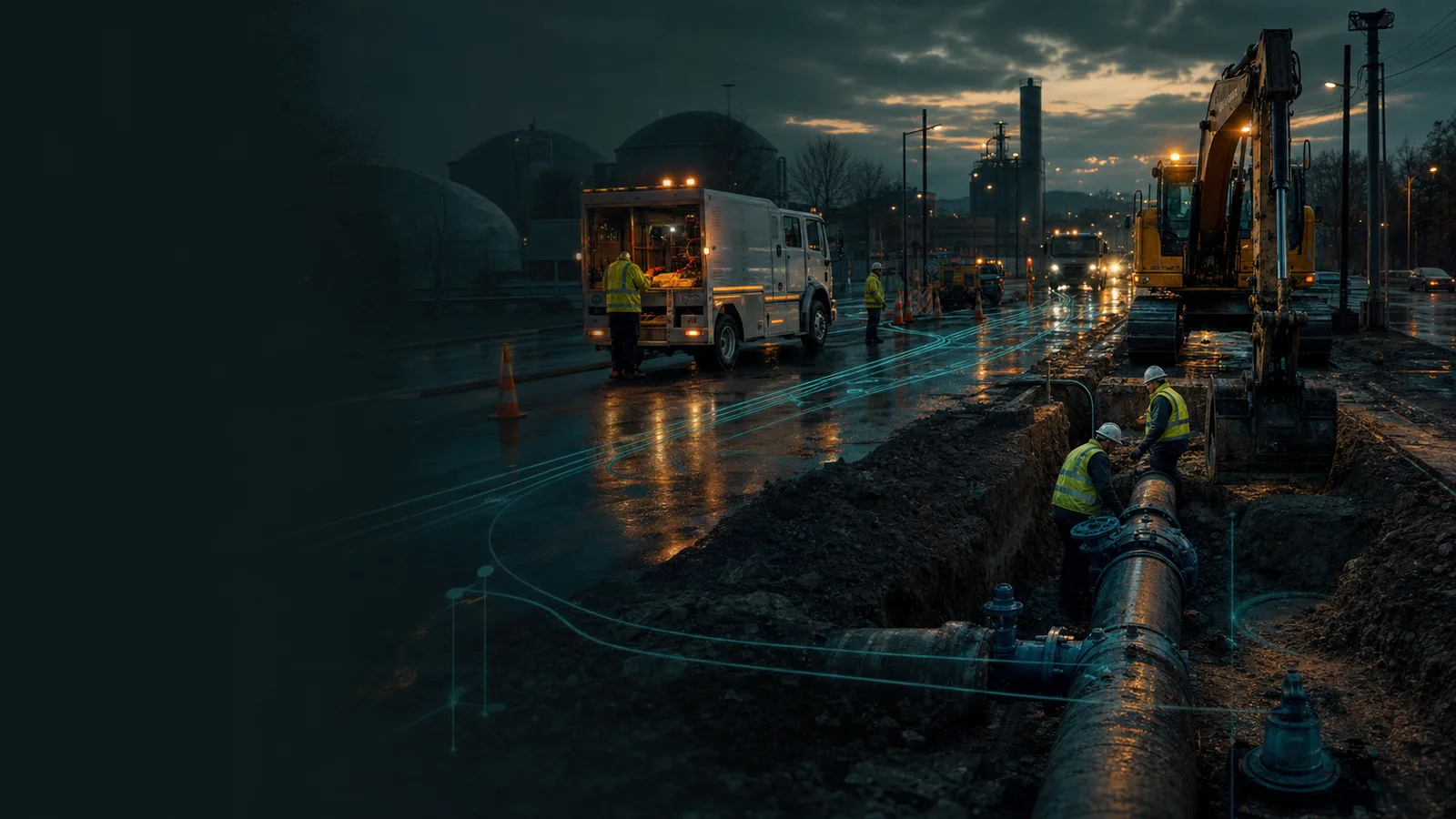
AcquaTerra is the operating layer that connects pipe records, failure history, field work, and external stressors to ranked maintenance and capital actions.
Validate on a hidden year before deployment. Then move risk into field work, renewal plans, and budget evidence.
Network Model
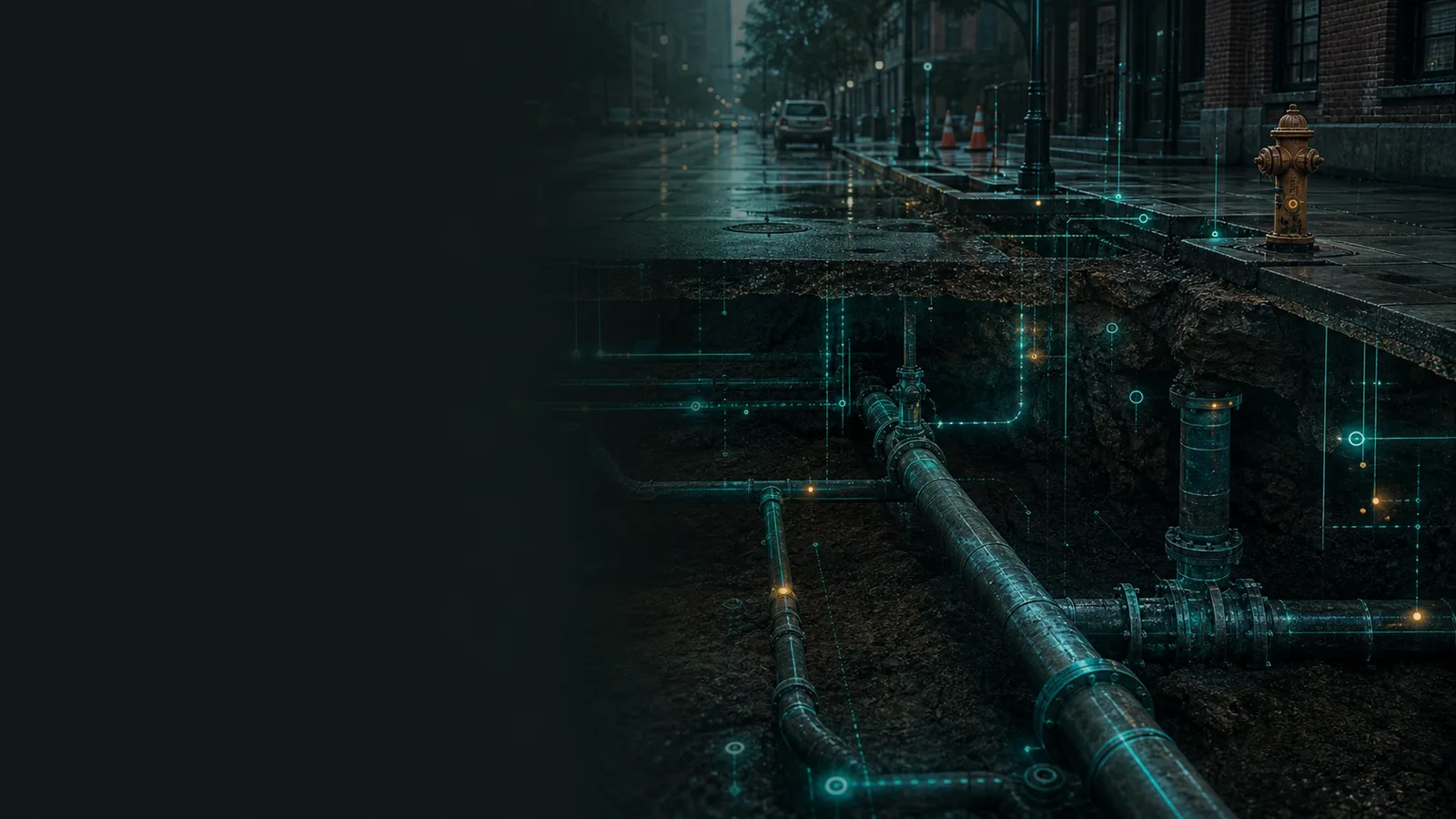
Pipes, valves, zones, work orders, repairs, inspections, breaks, pressure events, and replacements become one segment-time model with lineage, quality state, and auditability.
Forecast
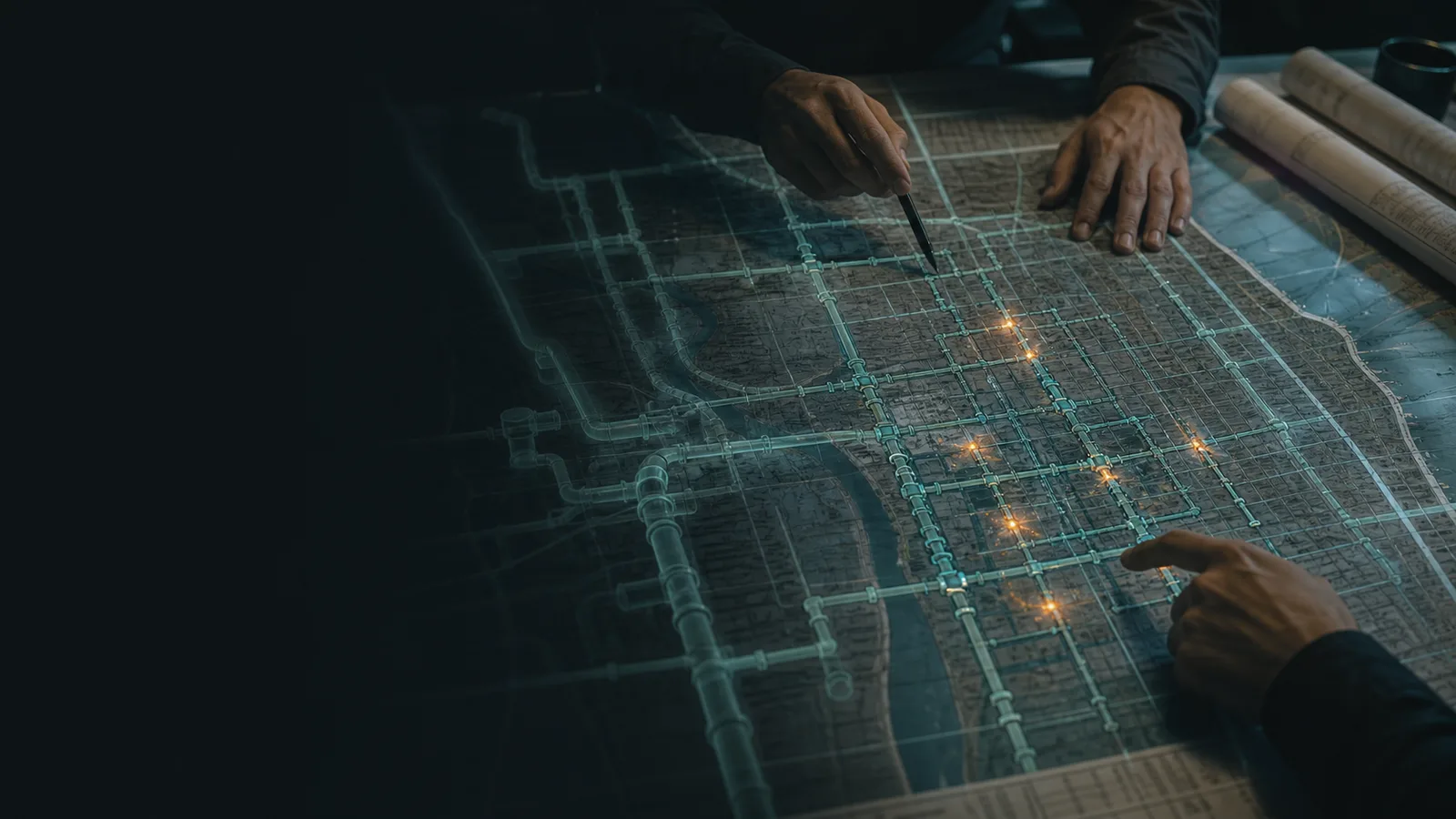
Each segment receives a forecast window, risk score, driver evidence, confidence, and action class. The output is a prioritized operating queue, not a passive map.
Validation
Start with historical data and hold back the latest year. Train on the earlier period, rank segments for the hidden year, then reveal the breaks, leaks, and repairs that actually happened.
Use older network history, repairs, failures, and context.
Keep the most recent year hidden from model training.
Score every eligible segment for future failure risk.
Measure lift, recall, review load, and missed events.
Signals
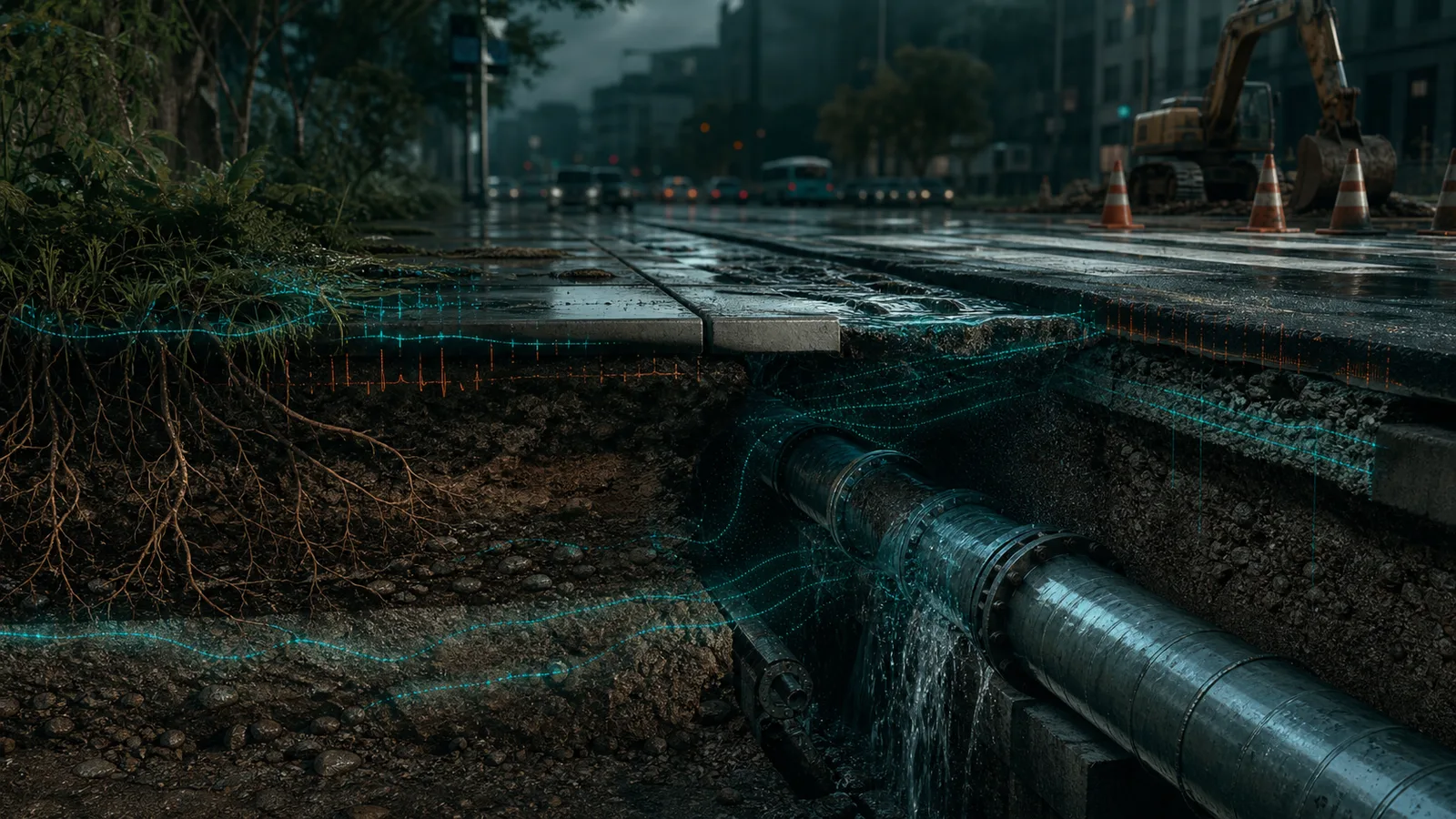
Failure risk is not only age and material. Weather, soil, traffic, construction, pressure behavior, and neighborhood history change the priority of each segment through space and time.
material, diameter, age, pressure, repair frequency, inspections.
soils, flooding, drought, freeze, heat, slope, land movement.
traffic load, road class, pavement cuts, nearby construction.
complaints, service interruptions, field notes, prior actions.
Operations
AcquaTerra routes risk into ranked work, review queues, field checks, renewal candidates, budget evidence, and outcome tracking for the systems utilities already use.
Ranked segments
Driver evidence
Field checks
Renewal candidates
Budget scenarios
Outcome tracking
AcquaTerra
Bring the network, event history, and a hidden year. We will show whether the model would have ranked the risk before the year unfolded.
Plan a backtest